The infrastructure everything else stands on
Business phone numbers, IVR, routing, records and billing, built India-first
Role: Head of Design · Scope: Platform UX, role-based dashboards, onboarding, billing and plan logic, marketing website design and build
Context
Every product above depends on this layer. Before a business can run AI agents or audit calls, it needs phone numbers, call routing, recordings and a bill that makes sense. Telephony is usually designed as plumbing: functional, dense and built for whoever configured it first.
Infrastructure products are judged by their edge cases. The happy path is easy. The downgrade, the quota limit and the role that can't see a setting are what define the product.
What the platform covers
- Virtual numbers (DIDs): provisioning and management
- IVR builder: call menus and routing logic
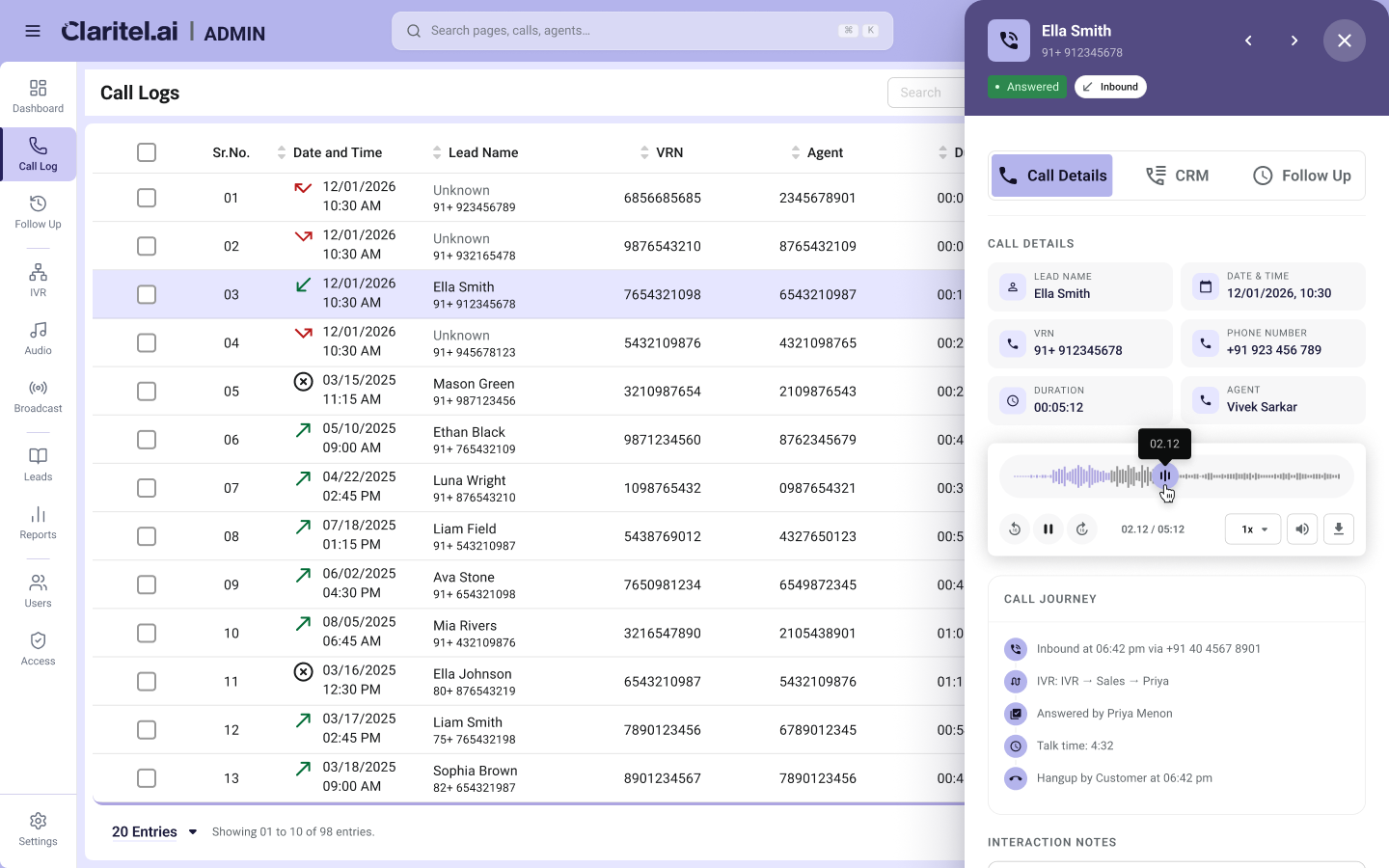
- Call records: history, recordings, search
- Team roles: admin, manager and supervisor, each with a dedicated dashboard
- Onboarding: getting a business live
- Billing & plans: quotas, invoicing, upgrades and downgrades
Key design decisions
-
Dashboards by responsibility, not by permission. Admins, managers and supervisors don't just have different access levels. They ask different questions. Each role got a dashboard built around what that person is responsible for, not a single dashboard with features hidden.
-
Compliance built into the core. For Indian businesses, telecom regulation (TRAI/DoT), data protection (DPDP) and GST invoicing aren't optional features. They are built into the core flows instead of added as settings.
-
Designing the uncomfortable edge cases. Plan logic is where trust is won or lost. For example: when a customer downgrades mid-cycle, what happens to the phone numbers that were included free in their old plan? There's no neutral answer. Revoking them breaks live operations, keeping them costs money, and charging for them surprises the customer. I treat these as explicit, documented decisions rather than leaving them to engineering defaults.