Ge-on — The Next In Social
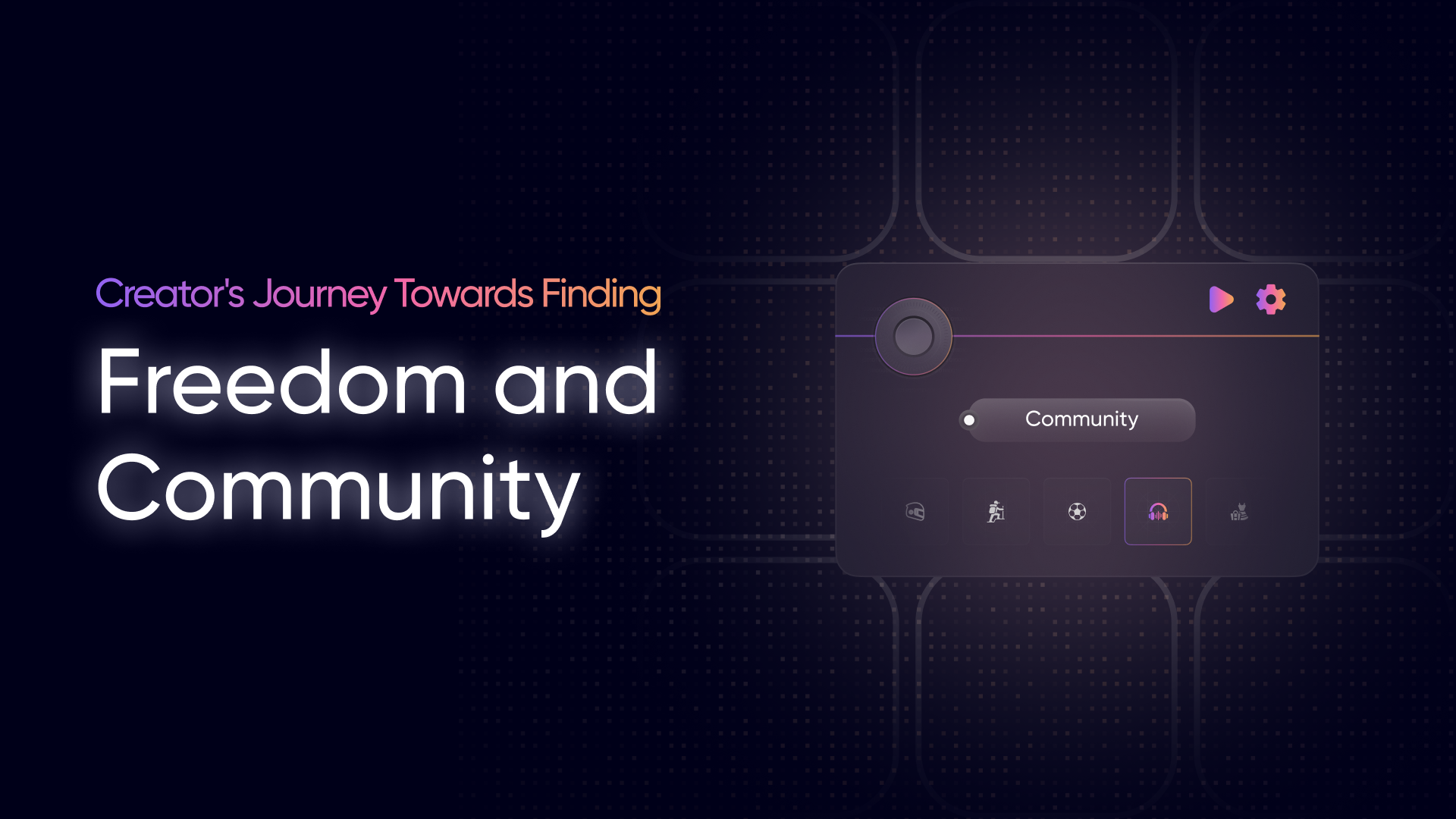
Ge-on is an operating system for AI-native communities. Over a focused 4-month engagement, I contributed as a UX Designer to shape the core platform experience, from modular community structures to AI-native workflows that help creators, brands, and communities truly own and scale their social ecosystems.
Ge-on
UX Designer
4 Months
01. Overview — What is Ge-on?
Ge-on is an operating system for AI-native communities. It empowers creators, brands, and communities to build, own, and scale bespoke social ecosystems using modular AI infrastructure.
Rather than being another “rented” social platform, Ge-on acts as the underlying layer: a customizable, AI-native social-tech stack where creators and communities own their data, audience, and monetization.
02. The Problem — Life on Rented Platforms
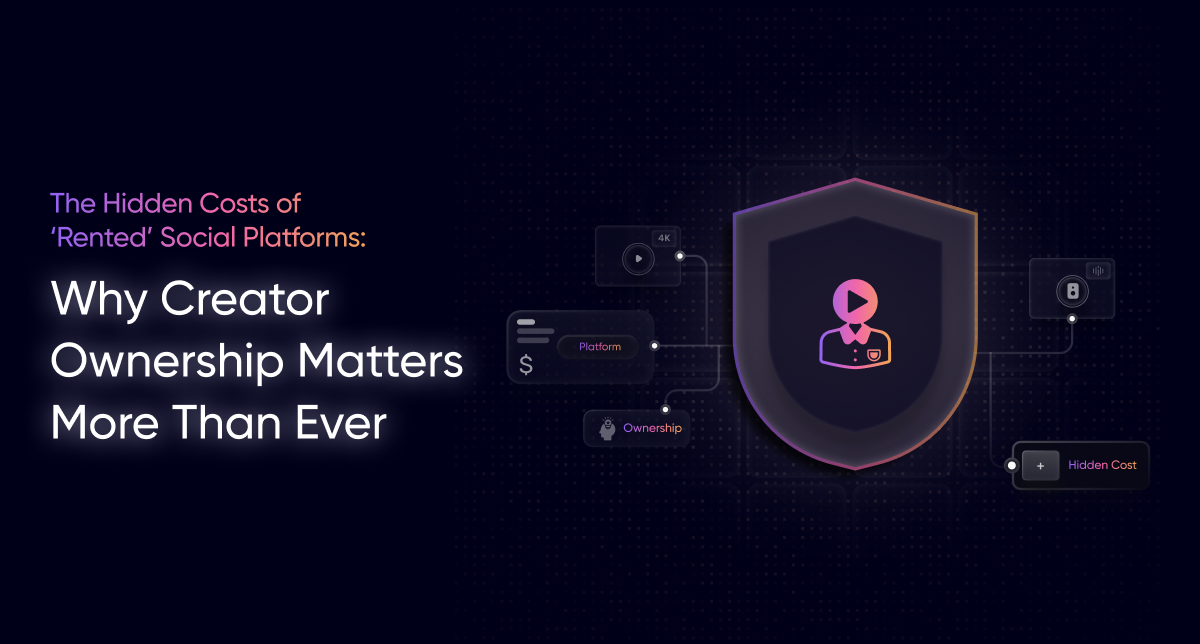
Creators and brands today rely heavily on rented platforms like Instagram, YouTube, TikTok, and X. This dependence creates structural pain points:
- Followers and reach can drop overnight due to opaque algorithms or policy changes.
- No true ownership of content, data, or distribution on rented platforms.
- Content volume expectations keep rising to stay visible and relevant.
- Each platform demands its own optimization strategy, increasing complexity and workload.
- Without strong analytics, creators lose insight into what really works.
- Limited access to AI workflow tools that could reduce costs and increase monetization.
The core insight: creators don’t just need better content tools—they need their own ownable social operating system.
03. Vision — The Next In Social
The vision of Ge-on is to re-architect social from “rented channels” to “owned ecosystems”. The platform serves the creator economy: creators, brands, and consumers who want deeper, more authentic community spaces.
Ge-on’s core values directly shaped my UX decisions:
- Empowerment: Creators fully own their digital spaces, content, and data.
- Authenticity: Designed for meaningful interactions, not just vanity metrics.
- Innovation: AI-native, modular tools that adapt to different community needs.
- Privacy & Ethical AI: Privacy-first, user-controlled AI built into every layer.
- Community-First: Architecture that centers collaboration and shared ownership.
- Transparency: Clear communication around how data and AI decisions work.
- Fair Monetization: Direct monetization for creators without hidden cuts.
04. My Role — UX Designer, Platform Experience
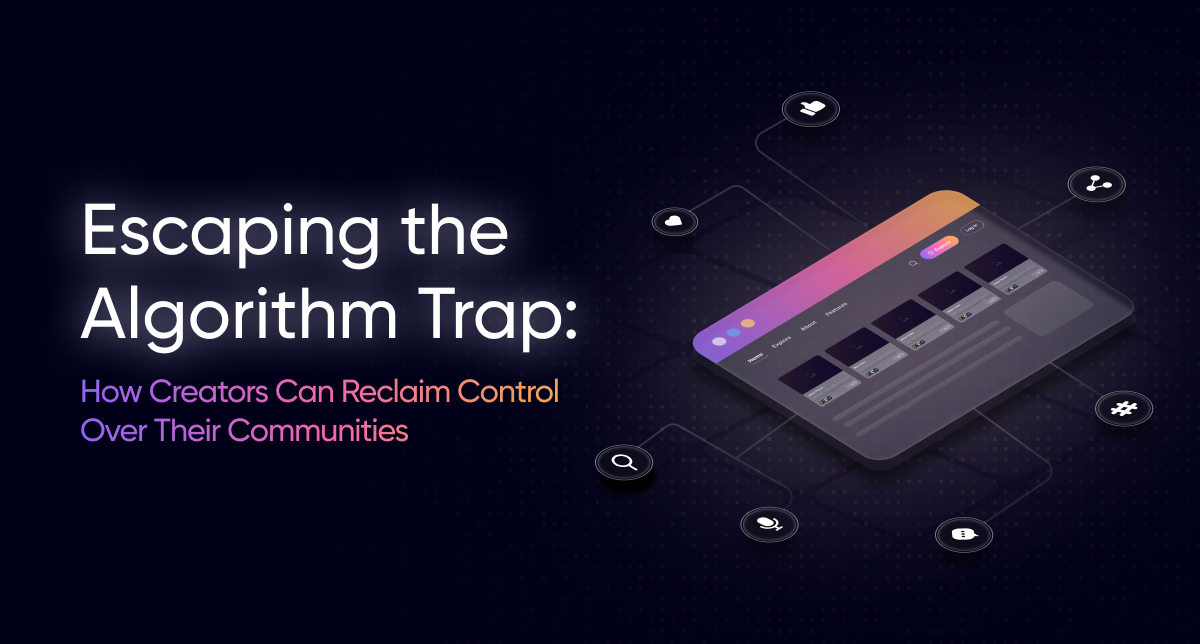
Across four months, I worked as a UX Designer focused on platform experience, collaborating with product and engineering to translate the Ge-on vision into concrete flows, structures, and components.
a. Foundation UX Architecture
- Mapped the ecosystem for creators, communities, and consumers across the platform.
- Defined initial information architecture for the “AI-native community OS”.
- Designed modular layouts for community spaces, channels, and dashboards.
b. AI-Native Workflows & Tools
- Explored UX for AI-assisted content creation, automation, and moderation workflows.
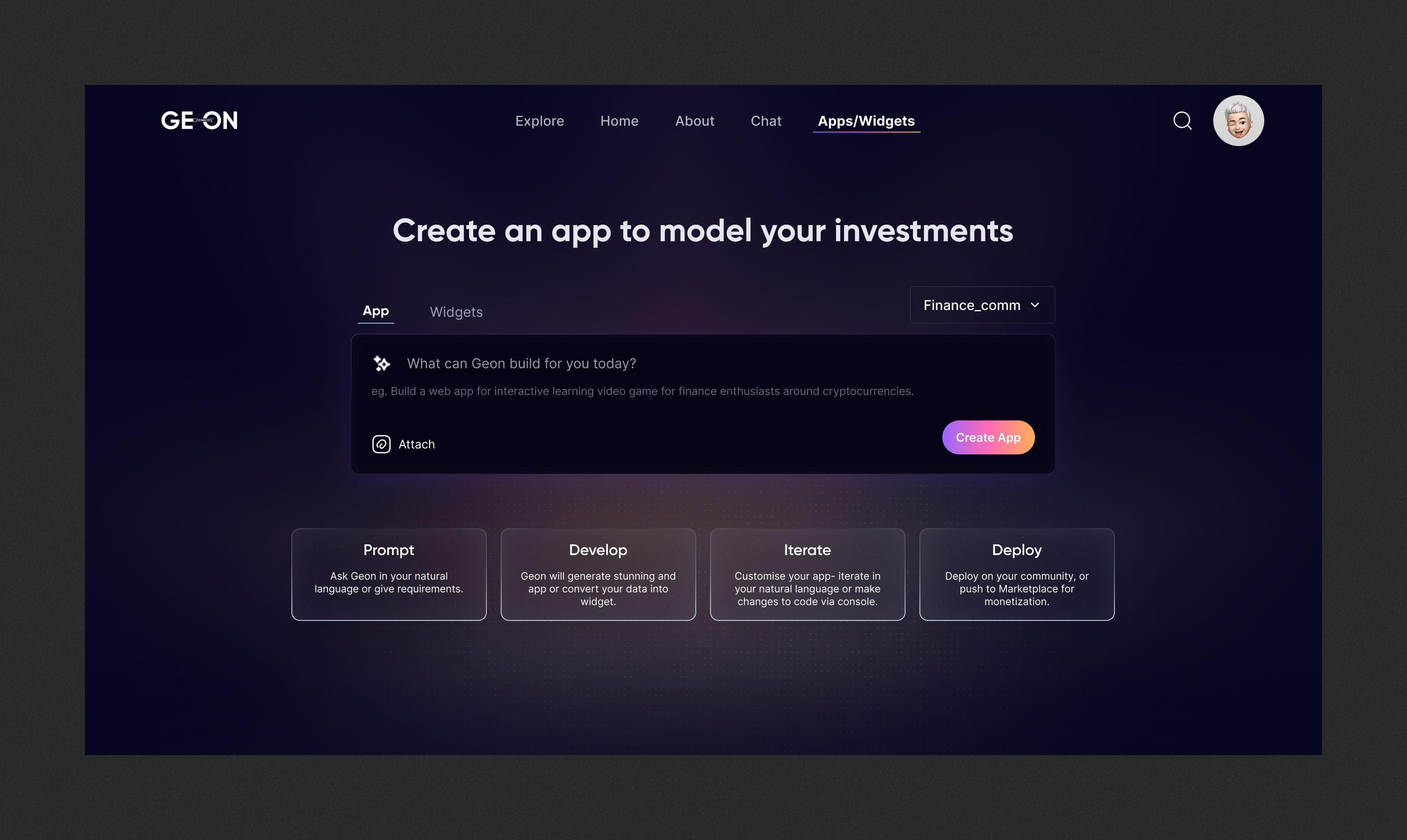
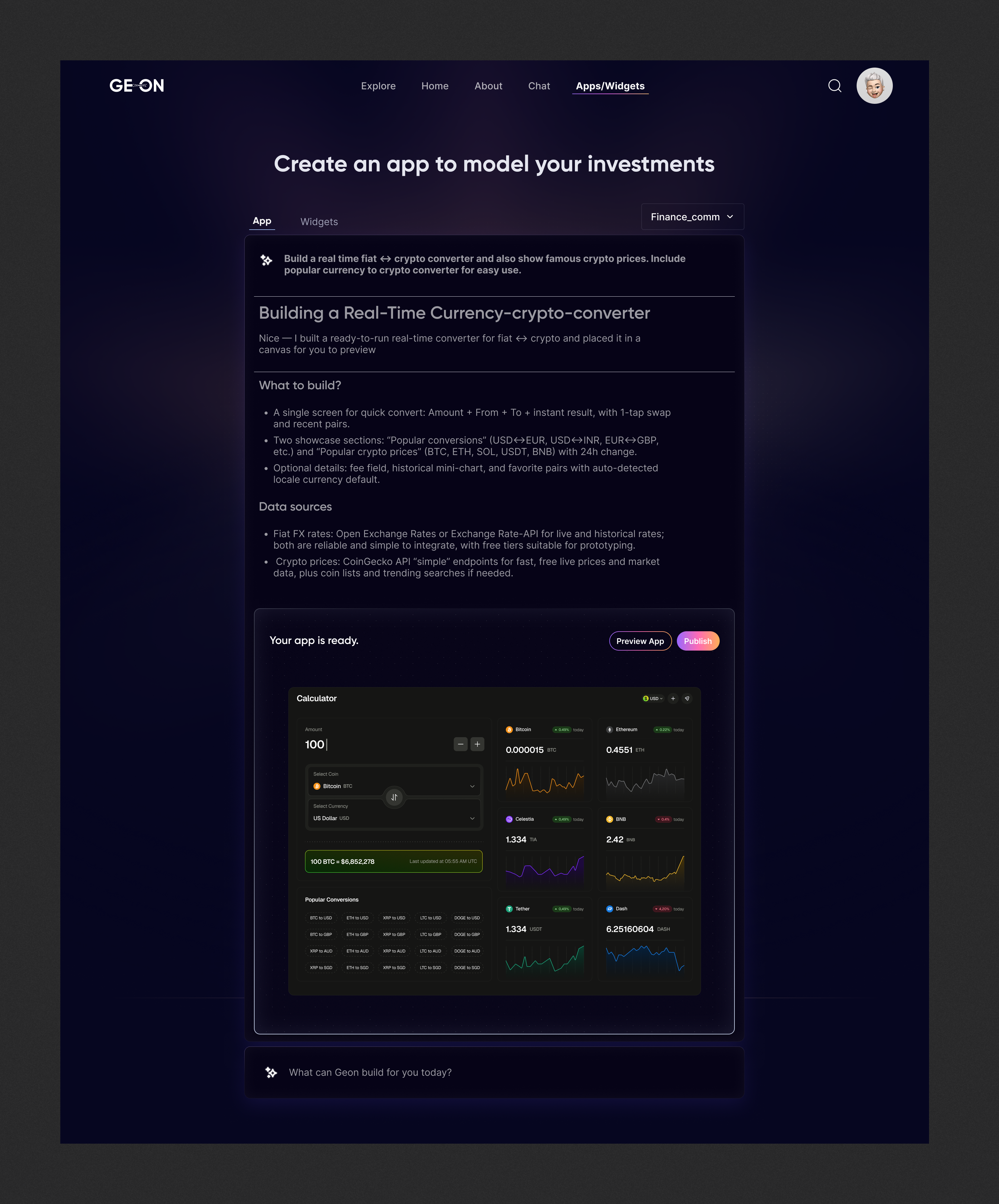
- Designed early flows for AI workflow builders that help creators automate repetitive tasks.
- Considered data visibility and privacy layers in every AI interaction.
c. Community Interaction & Engagement
- Created journeys for onboarding creators and their audiences into new community spaces.
- Defined engagement patterns around posts, discussions, events, and micro-communities.
- Designed monetization touchpoints aligned with direct, fair, creator-first revenue.
d. Design System Kickstart
- Established baseline grids, spacing rules, and typography hierarchy.
- Created reusable components to support rapid iteration on new features.
05. Outcomes — What This Work Enabled
Within a short 4-month window, the work focused on clarity, foundations, and scalability rather than heavy visual polish. Key outcomes included:
- A clear UX direction for Ge-on as an AI-native community OS.
- Modular layouts and components that reduced redundancy and complexity in screen design.
- Unified flows for creators, communities, and consumers that aligned with platform values.
- A design foundation that product and engineering could extend into deeper AI features.
Homepage Creation
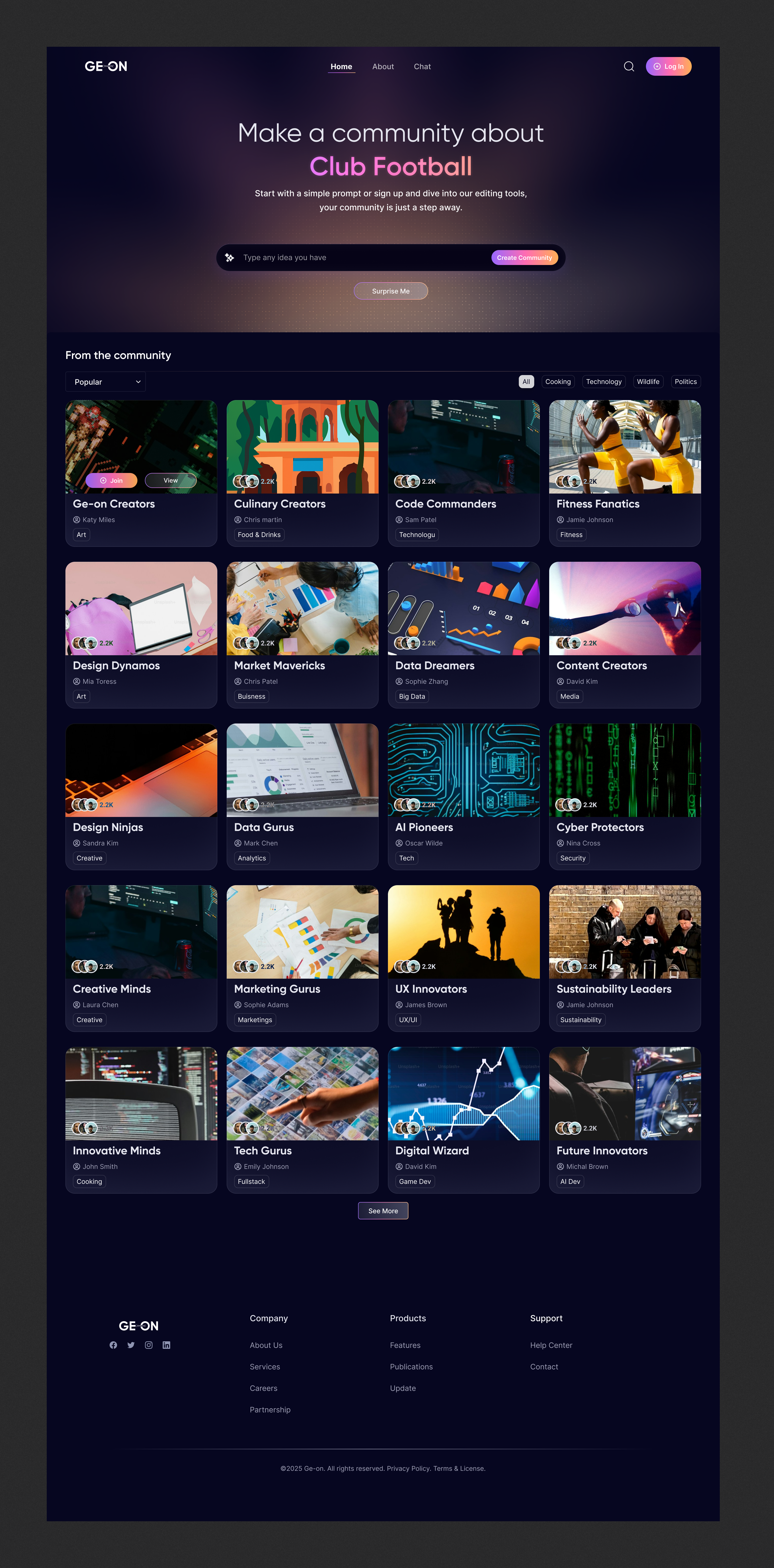
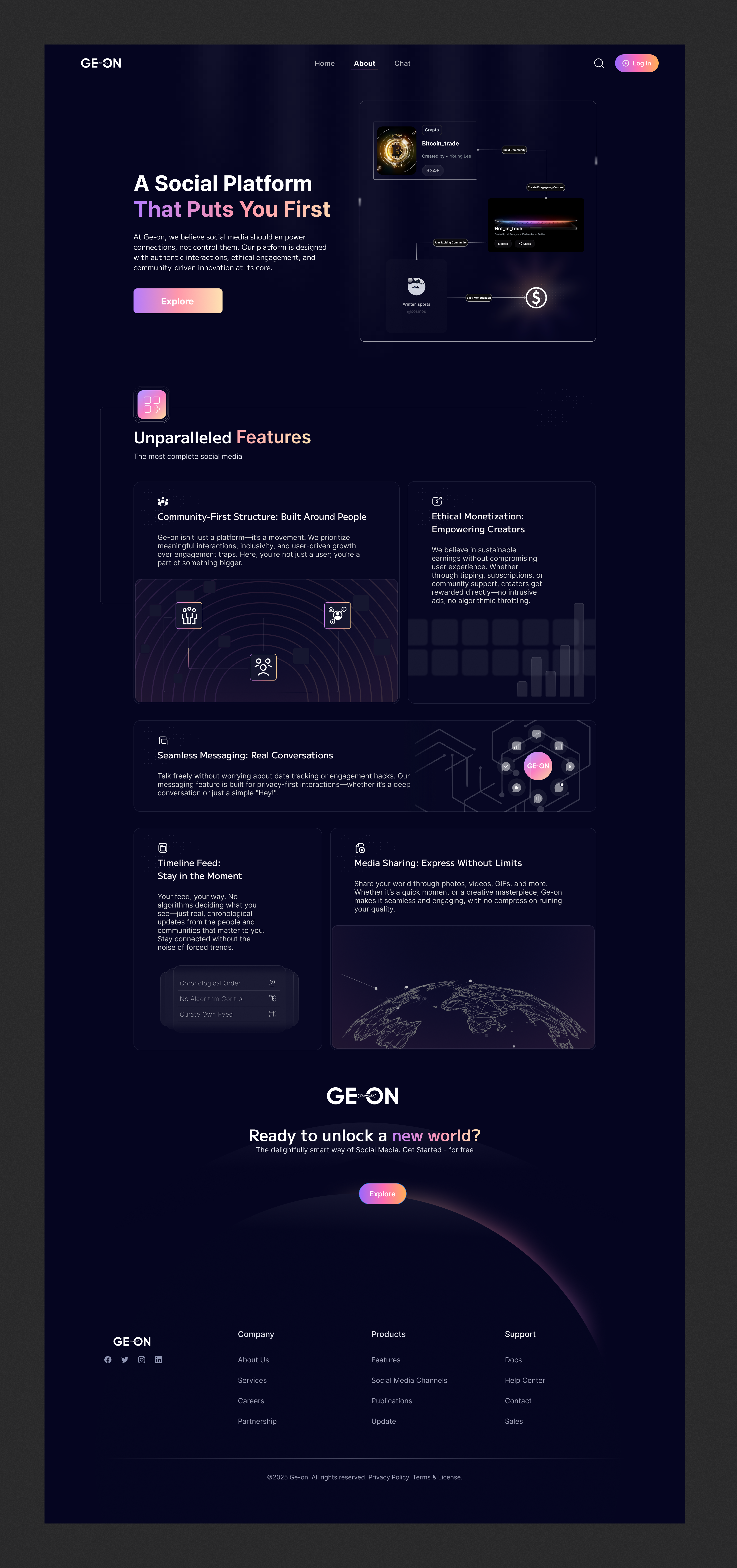
About
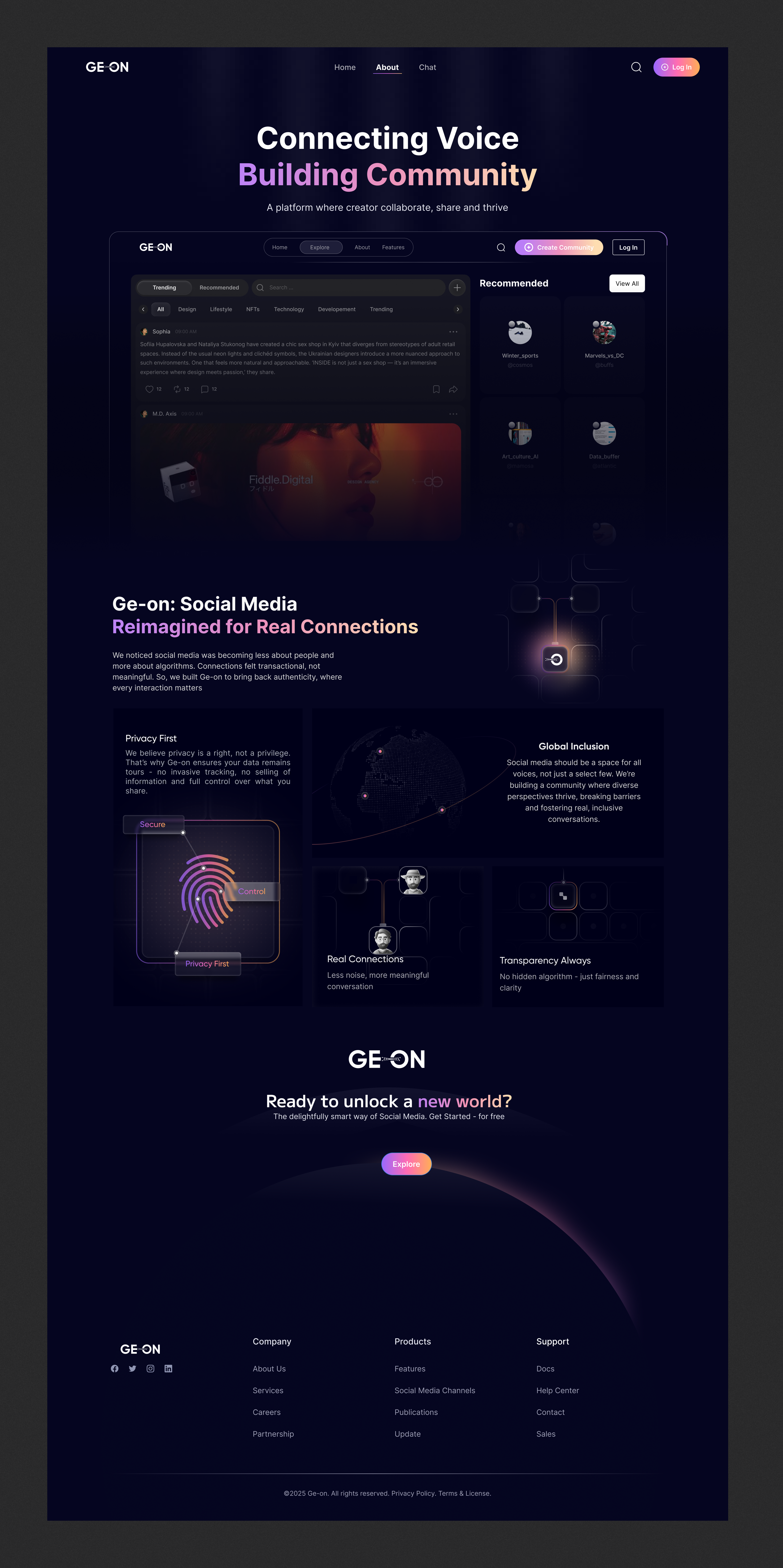
Explore
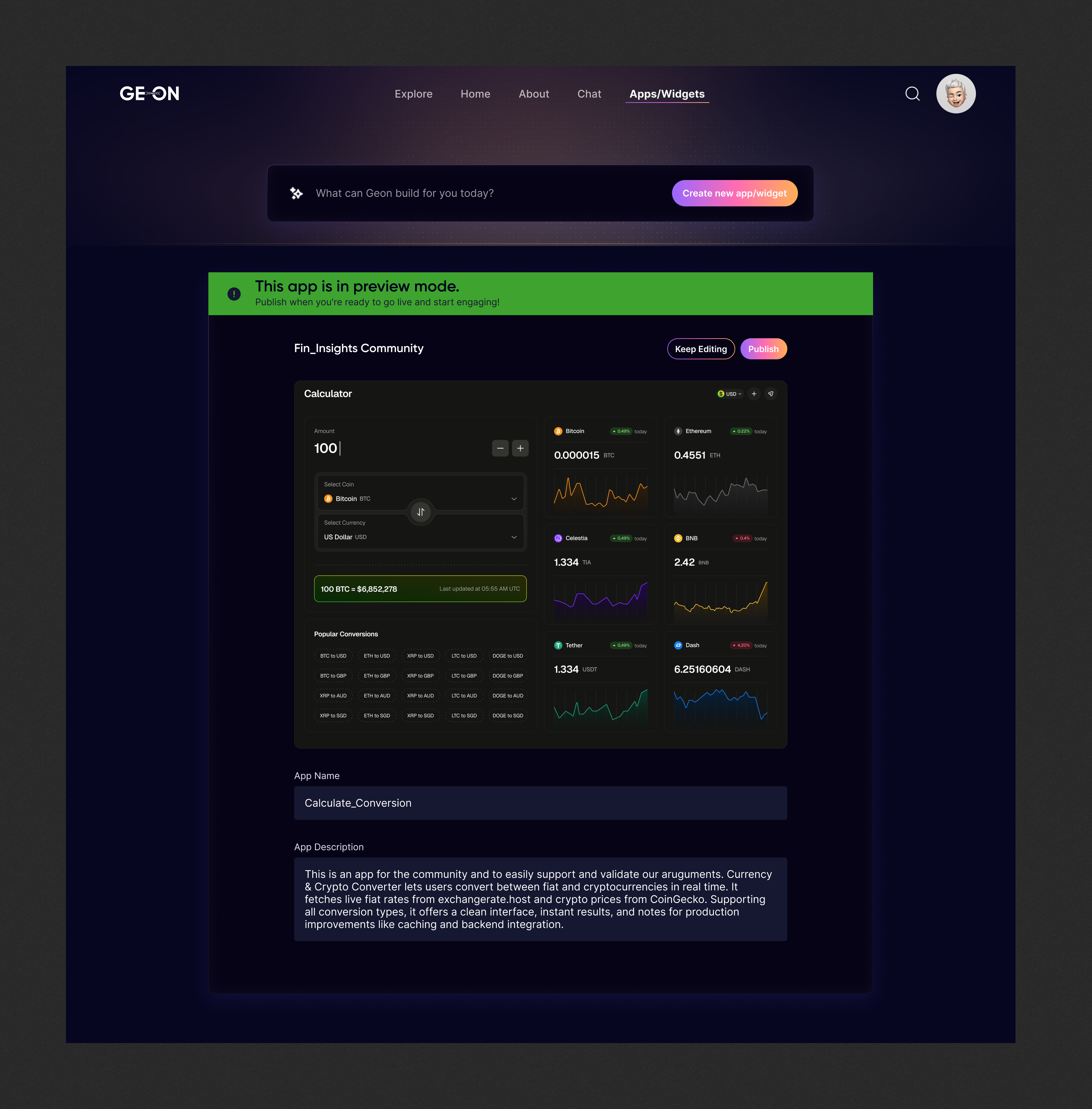
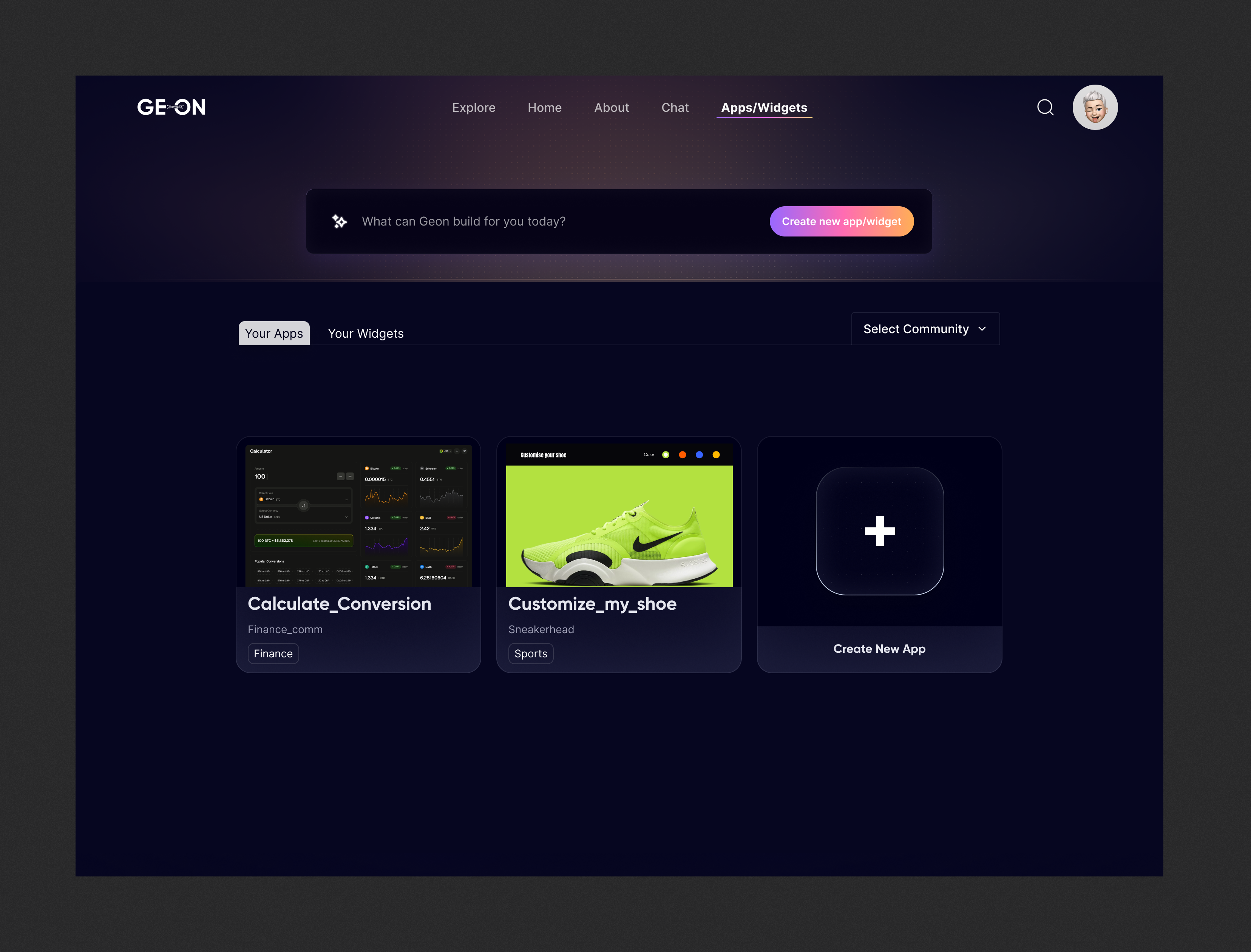
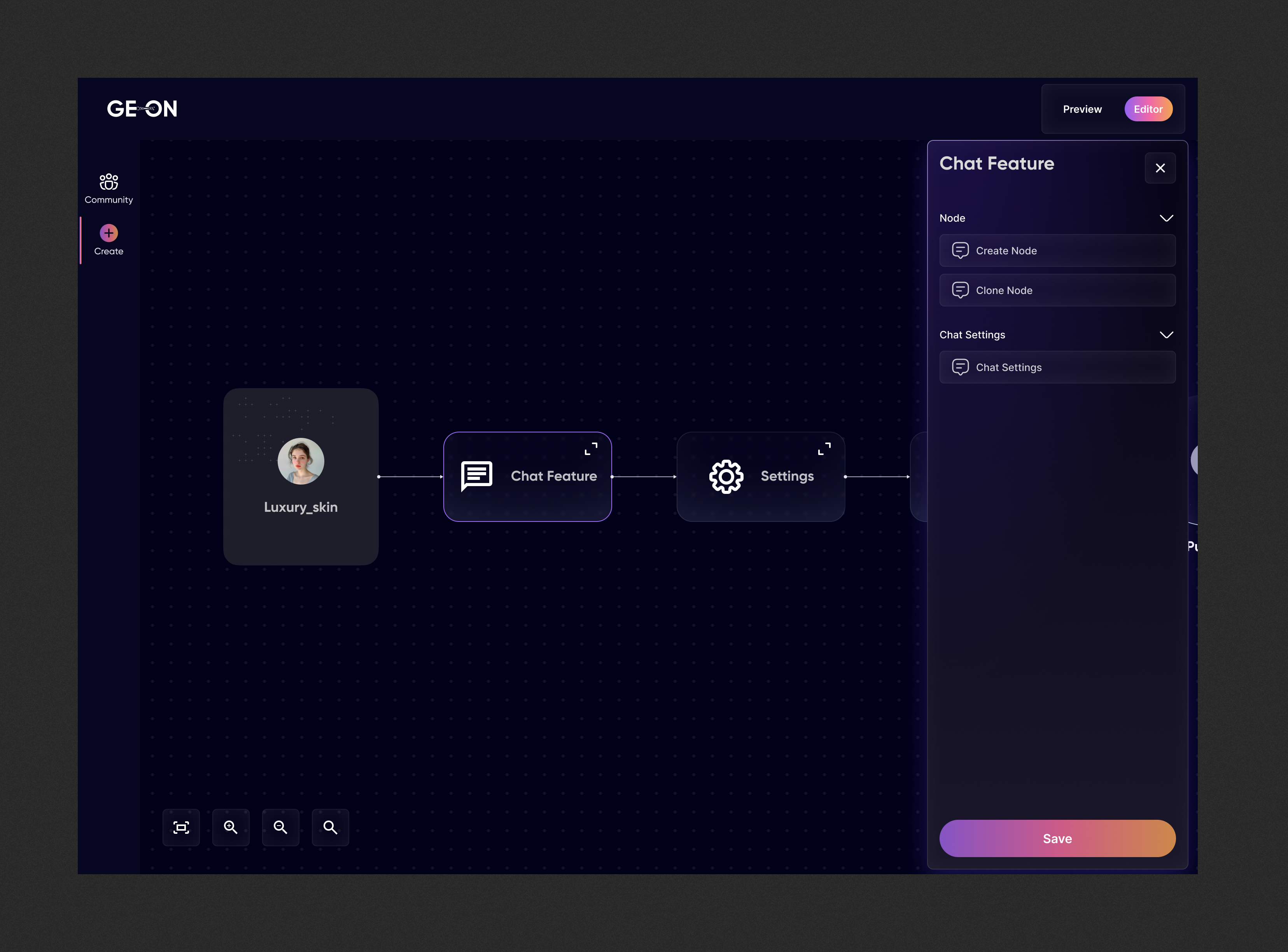
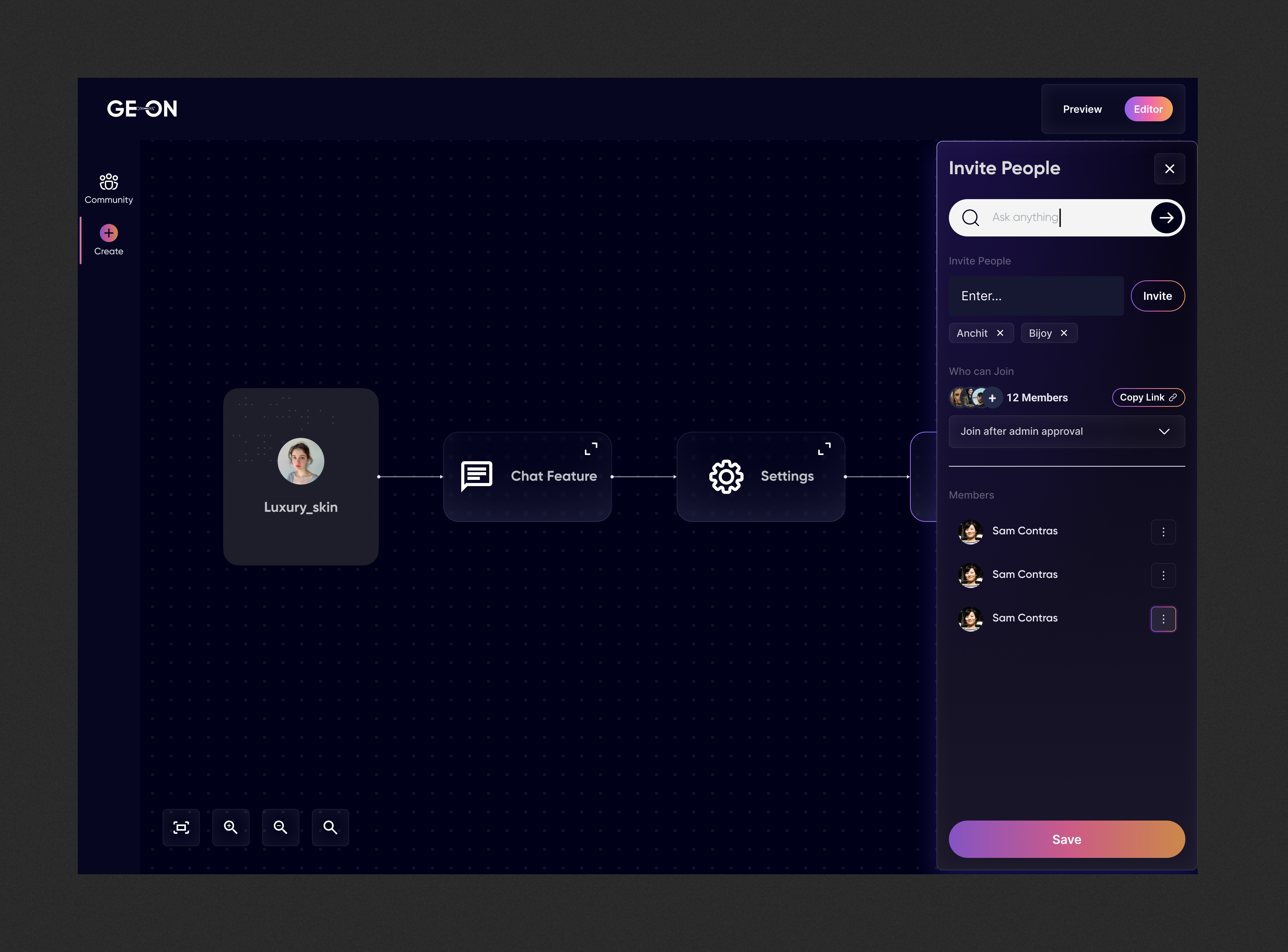
App/Widgets Creation
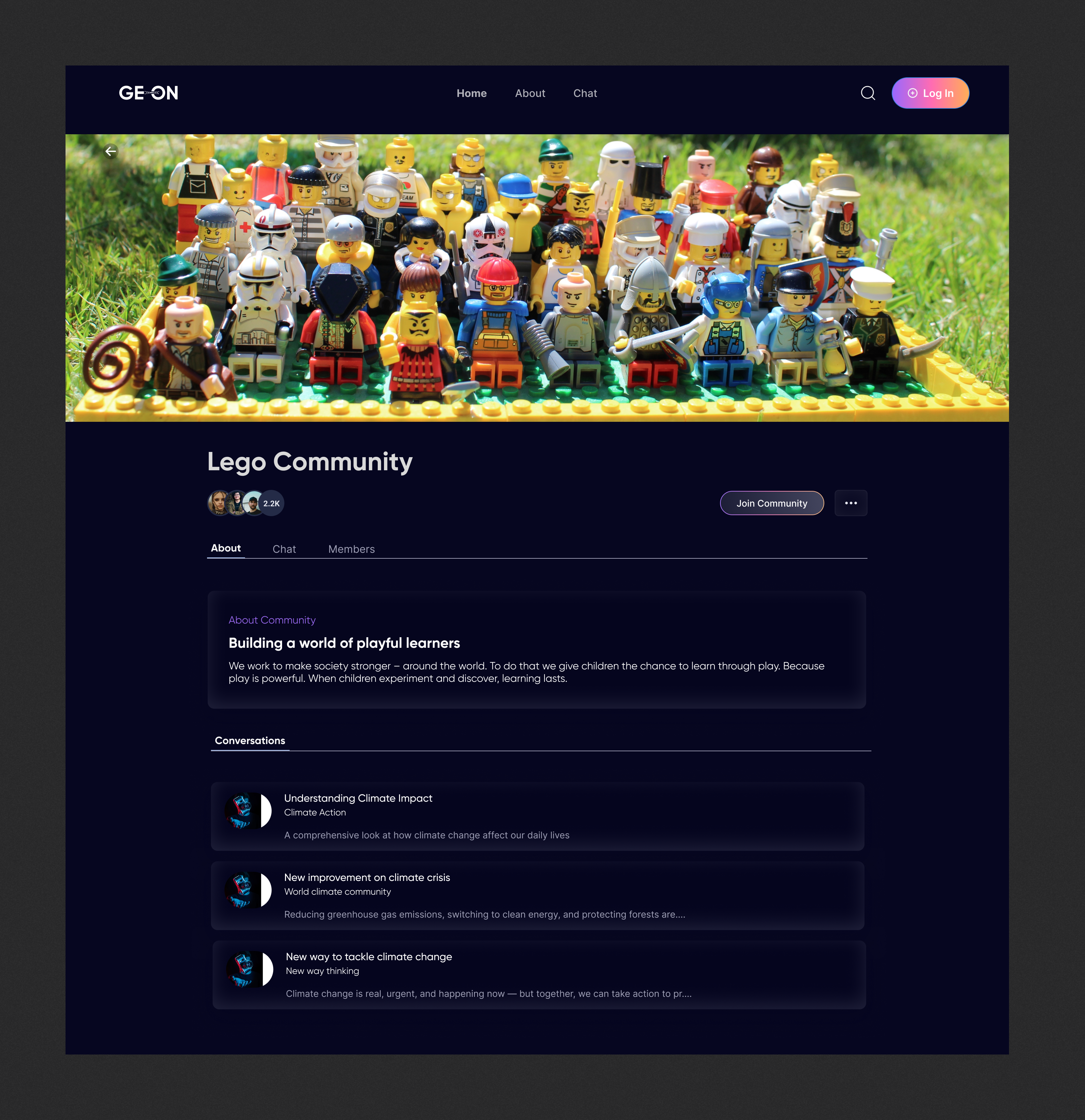
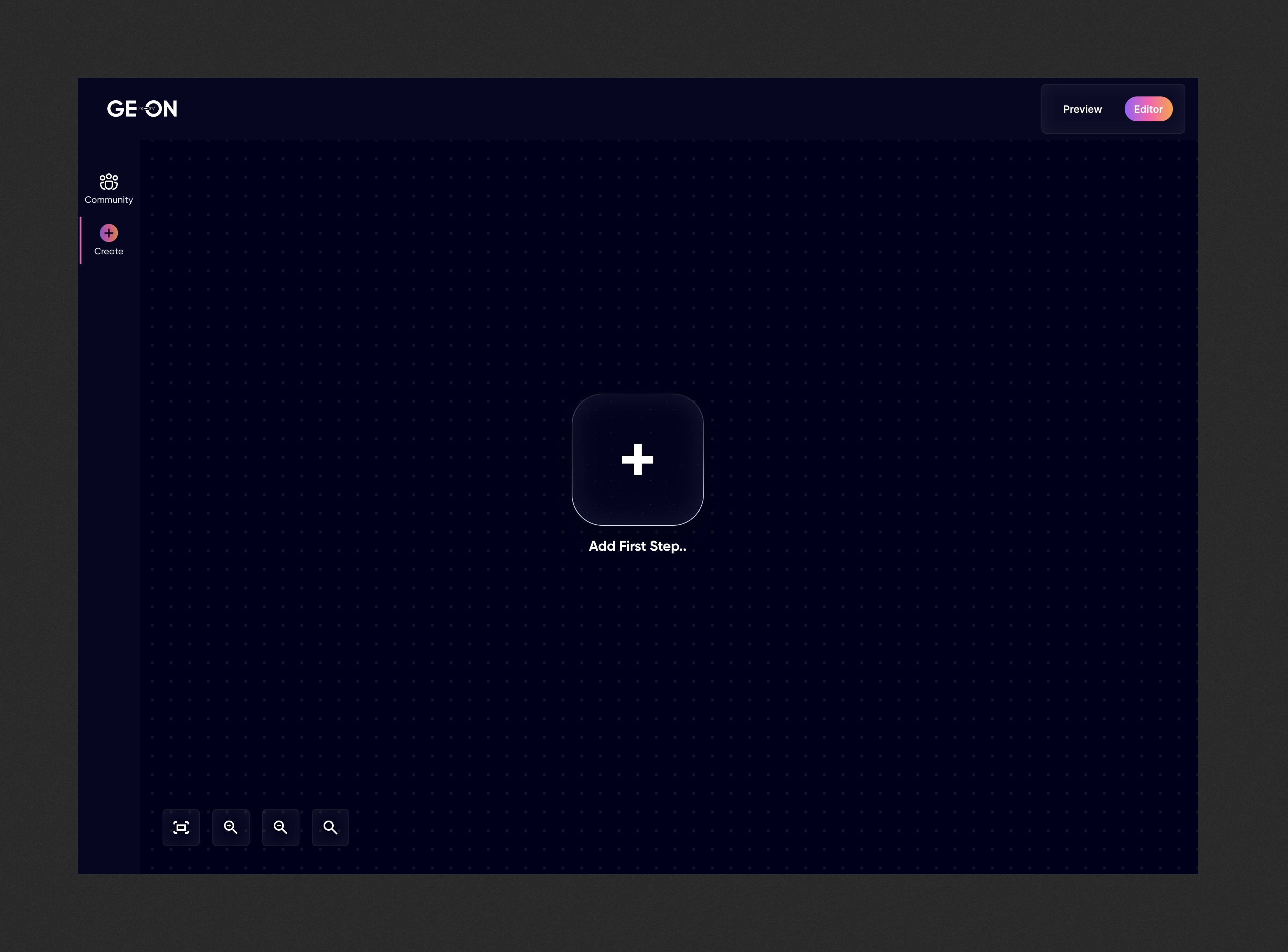
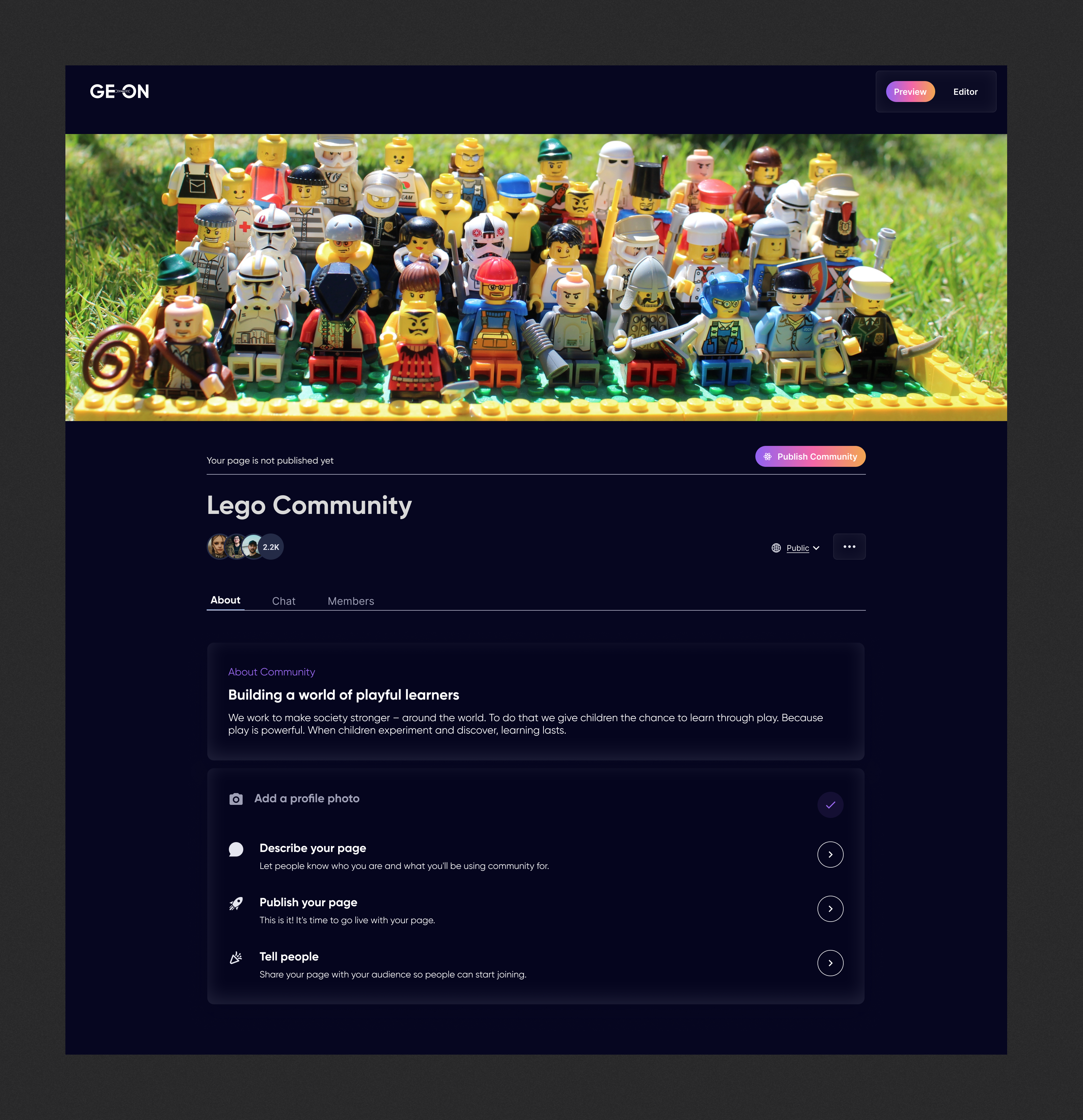
Community Creation
06. Reflection — Designing the Future of Social
Ge-on helped me think beyond traditional “single app” social products and towards infrastructure-level social design. A few key learnings:
- Designing for AI-driven ecosystems requires flexible, future-proof structures.
- Privacy and ownership principles fundamentally reshape standard UX patterns.
- Community-first design balances the needs of individuals with the health of the whole network.
- Modular systems are essential for teams who want to move fast without losing coherence.
Ge-on shaped my understanding of the future of social: a world where creators own the platform, not the other way around.
Let's talk.
Have a project in mind? Send me a message and I'll get back to you within 24 hours.