Claritel.ai — A 4-Month Design Transformation
Claritel.ai is an AI-powered, omnichannel communication platform built for modern support teams. Over a focused 4-month journey, I helped shape its brand identity, design a sales-ready MVP that closed ₹5,00,000 in business, craft a new marketing site, and refine the platform UX based on real-world client feedback.
Claritel.ai
Platform Designer
4 Months
Stepping Into Claritel
When I joined Claritel.ai, it was an early-stage AI startup with a clear vision: to build a powerful, human-centric communication platform for modern businesses. The potential was huge, but the product was still raw, the brand undefined, and the experience fragmented across touchpoints.
My mission was simple yet ambitious: shape the identity, build the foundation, and elevate the user experience of Claritel — from brand to product.
Understanding Before Designing
The first month was all about immersion. Instead of jumping straight into Figma, I started with conversations and context.
I interviewed founders, developers, early clients, and customer-facing teams to understand:
- What problem is Claritel really solving?
- Who are our primary users and decision-makers?
- Where does the platform fall short today?
- What is the long-term vision for the product?
One insight became obvious — Claritel lacked a cohesive brand identity that communicated trust, clarity, and innovation.
Brand Foundations
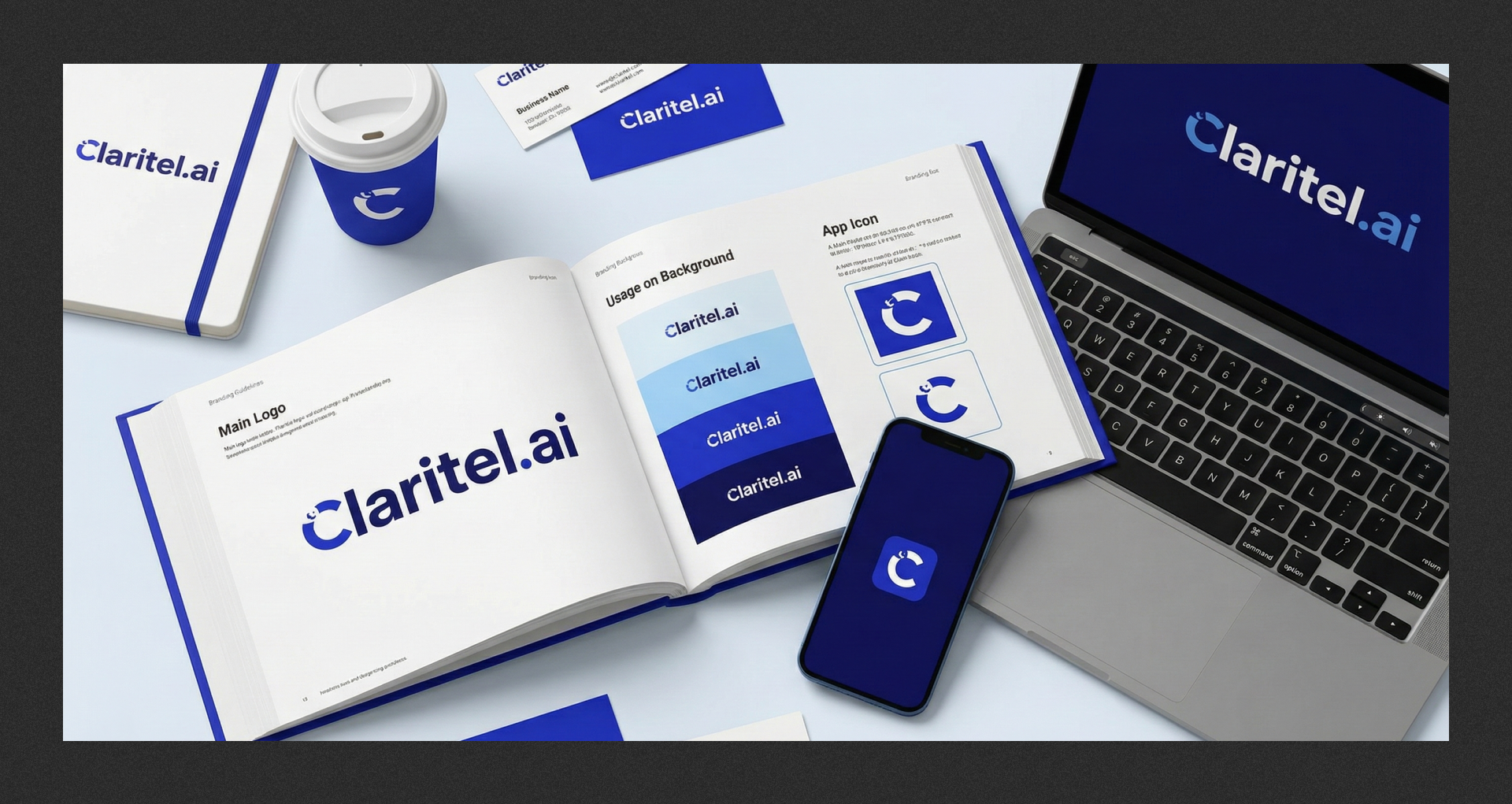
I crafted the complete visual identity system for Claritel, including:
- Logo and logomark system
- Brand colours and typography scales
- Letterhead and business cards
- Sales and investor brochure
- Brand deck and visual language system
This work became the foundation that unified every future touchpoint — from product UI to sales presentations.
Logo
Stationery
A design system that makes Claritel easier to build — and easier to use
To keep Claritel consistent as it grows, I built a design system that brings together visual aesthetics, usability, and implementation efficiency. Instead of designing every screen from scratch, the team now works with reusable tokens, components, and patterns — which results in faster delivery and a better experience for users.
Light & Dark Themes
The system supports both light and dark themes, with synchronized typography scales, spacing, elevation, and states. This makes Claritel feel at home in different environments while keeping the core identity intact.
Figma Tokens & Responsiveness
Using Figma tokens for colours, typography, spacing, and radii ensures that updates scale across the entire product. Paired with responsive layout rules, it makes Claritel behave well across different screen sizes and contexts.
Predictable patterns, clear hierarchy, and accessible contrast make the interface easier to scan, learn, and use — especially in high-pressure support environments.
Shared tokens and components reduce design–dev drift and speed up new feature work, while keeping visual and interaction language consistent.
Colour choices and type scales are tuned for readability and contrast, making Claritel more inclusive and usable across themes and devices.
Designing the MVP That Closed ₹5 Lakhs
With the foundations in place, the next challenge was to design a product MVP that could clearly explain Claritel, demonstrate value, and help the team close early deals.
This MVP needed to:
- Explain what Claritel does in plain language.
- Showcase key flows and capabilities of the platform.
- Be intuitive enough to demo live with minimal training.
- Be modular and scalable for future features.
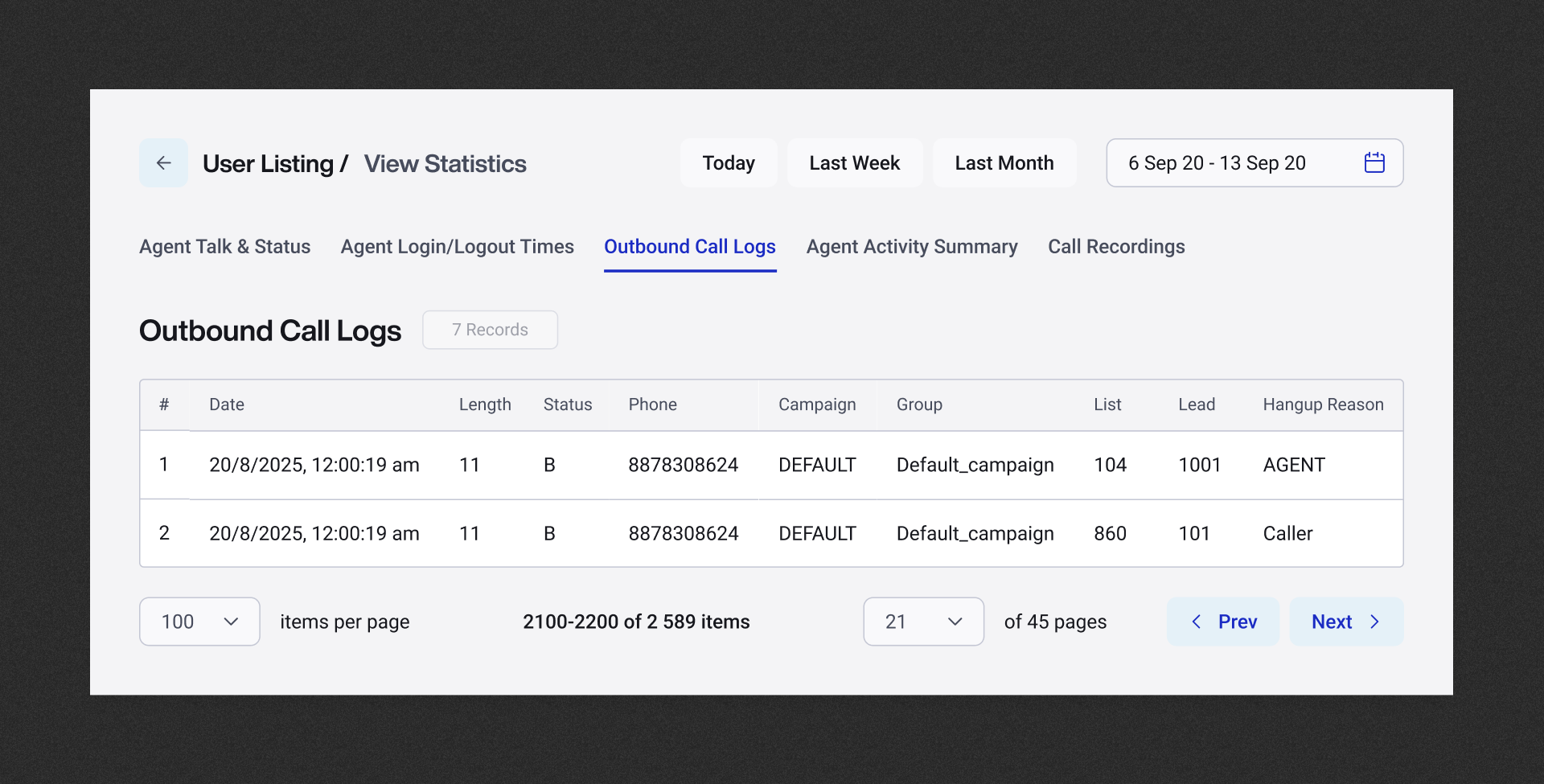
MVP Experience Design
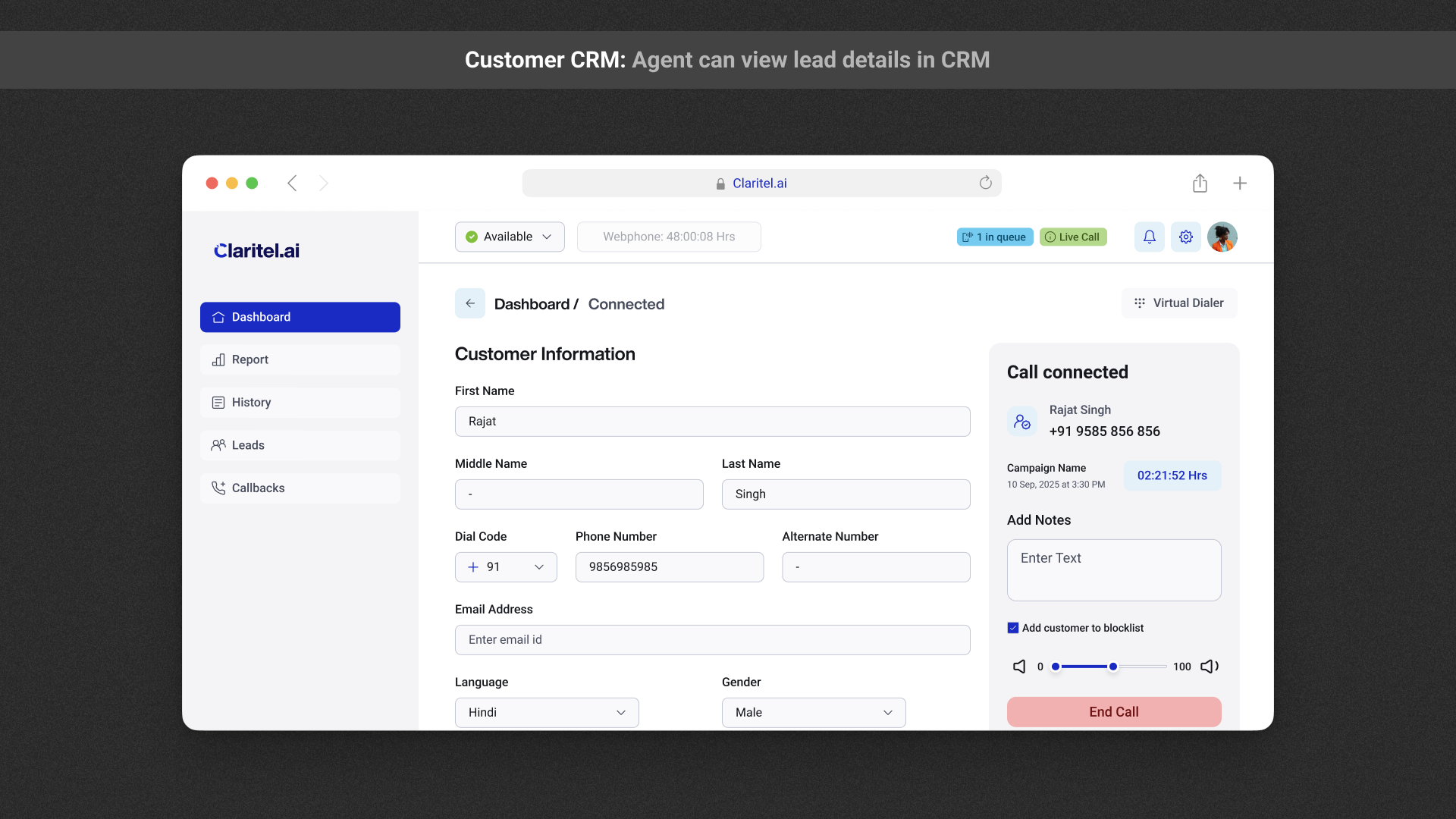
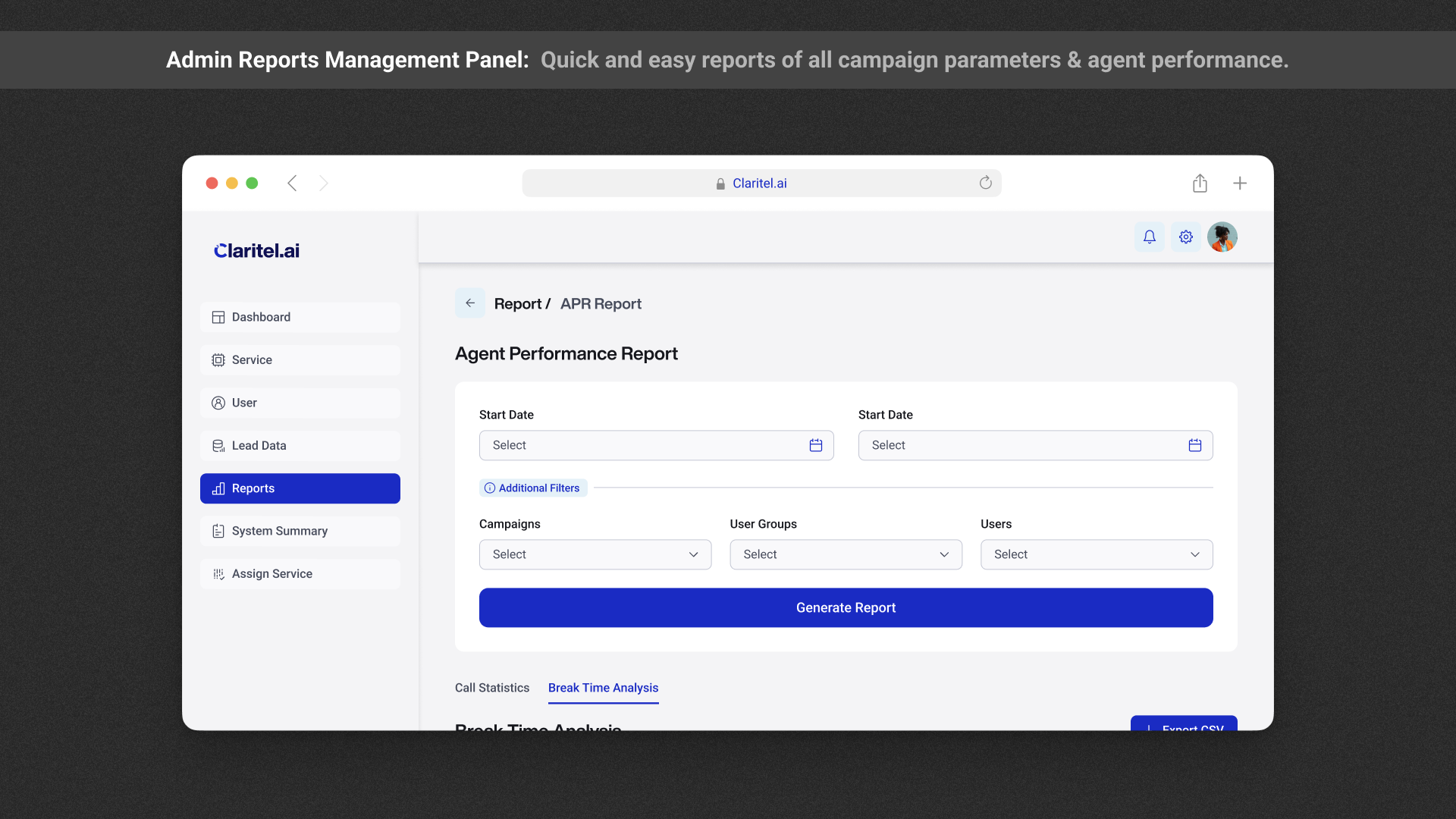
- Created streamlined end-to-end user flows for agents, supervisors, and admins.
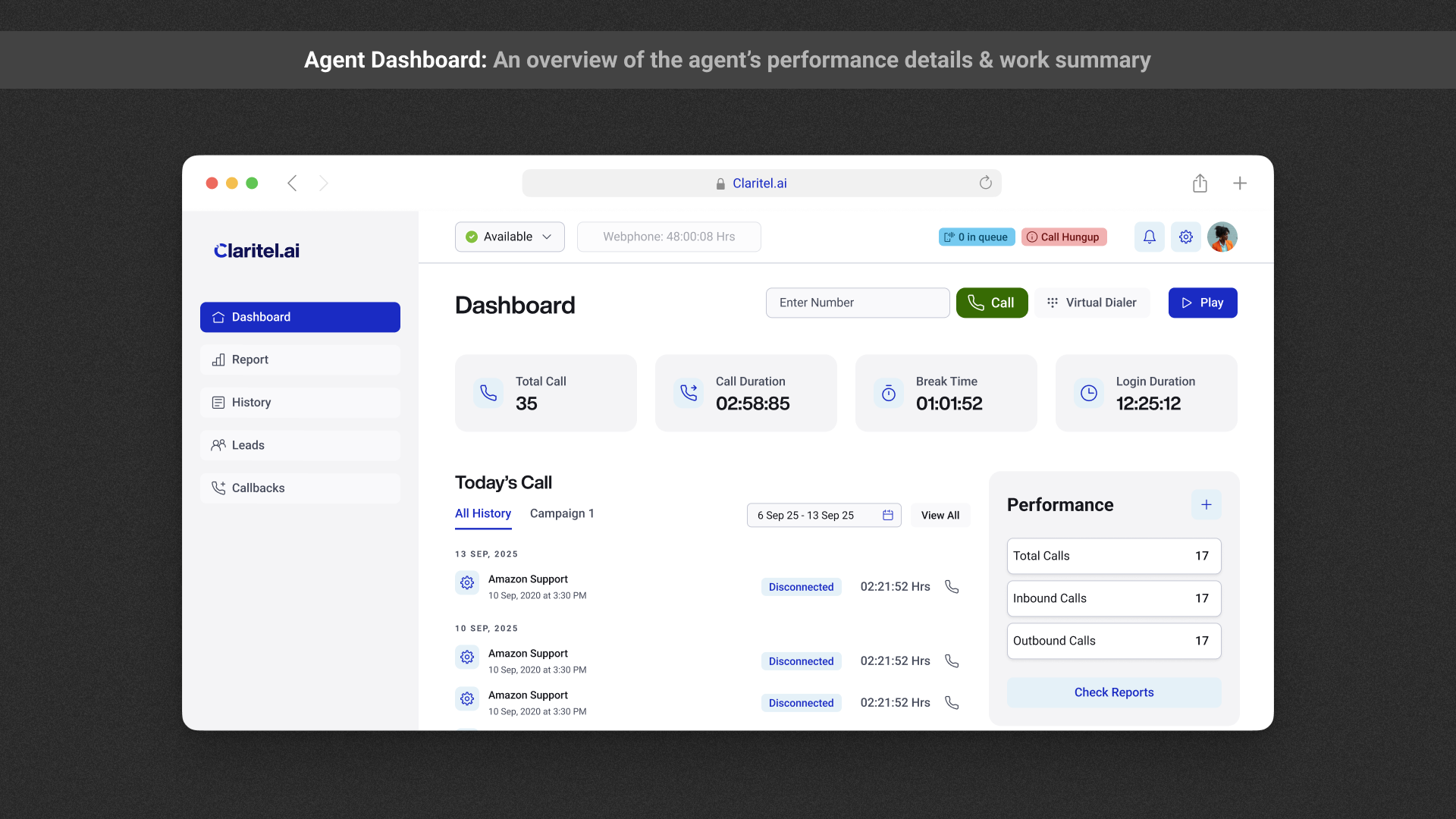
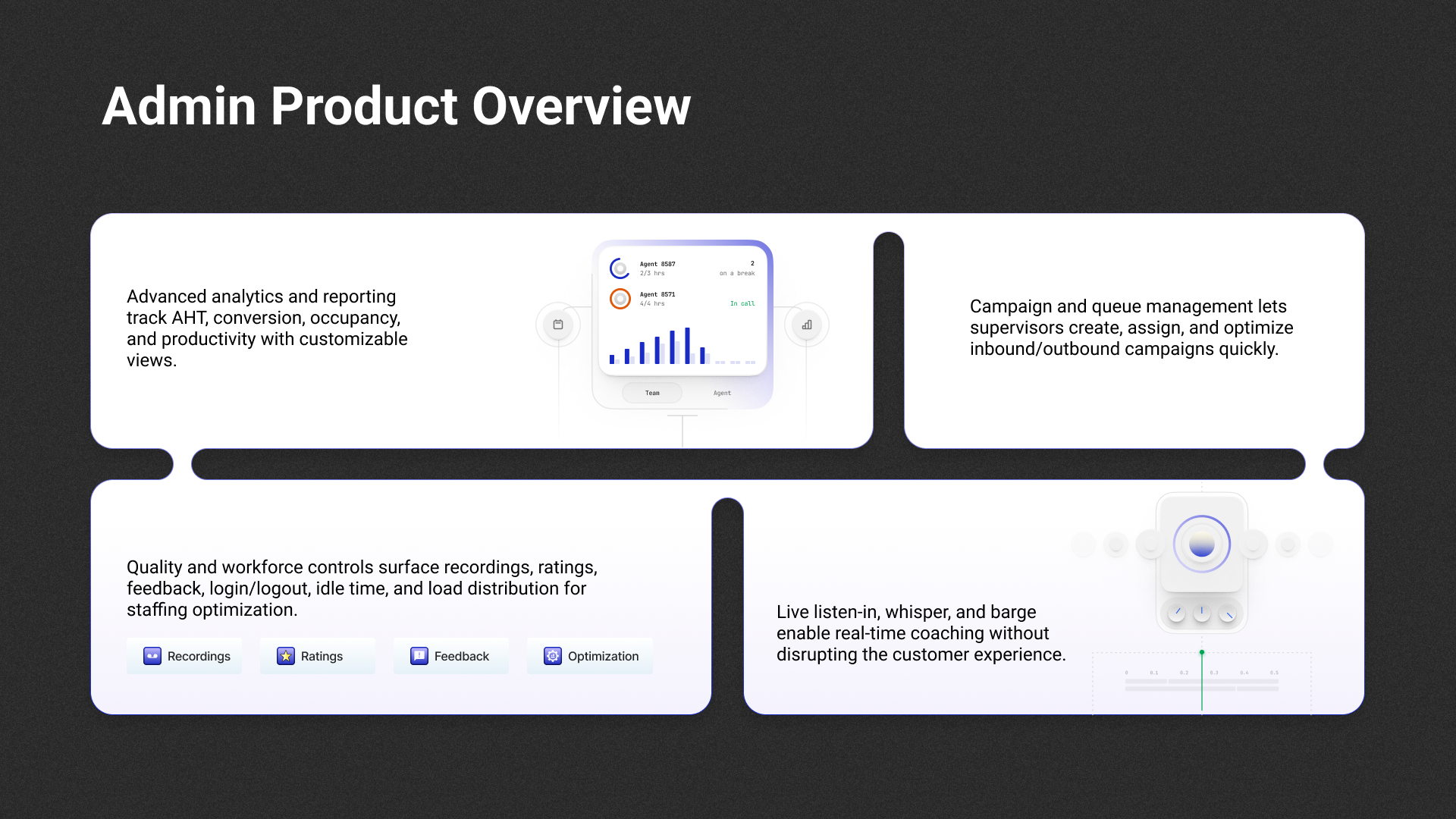
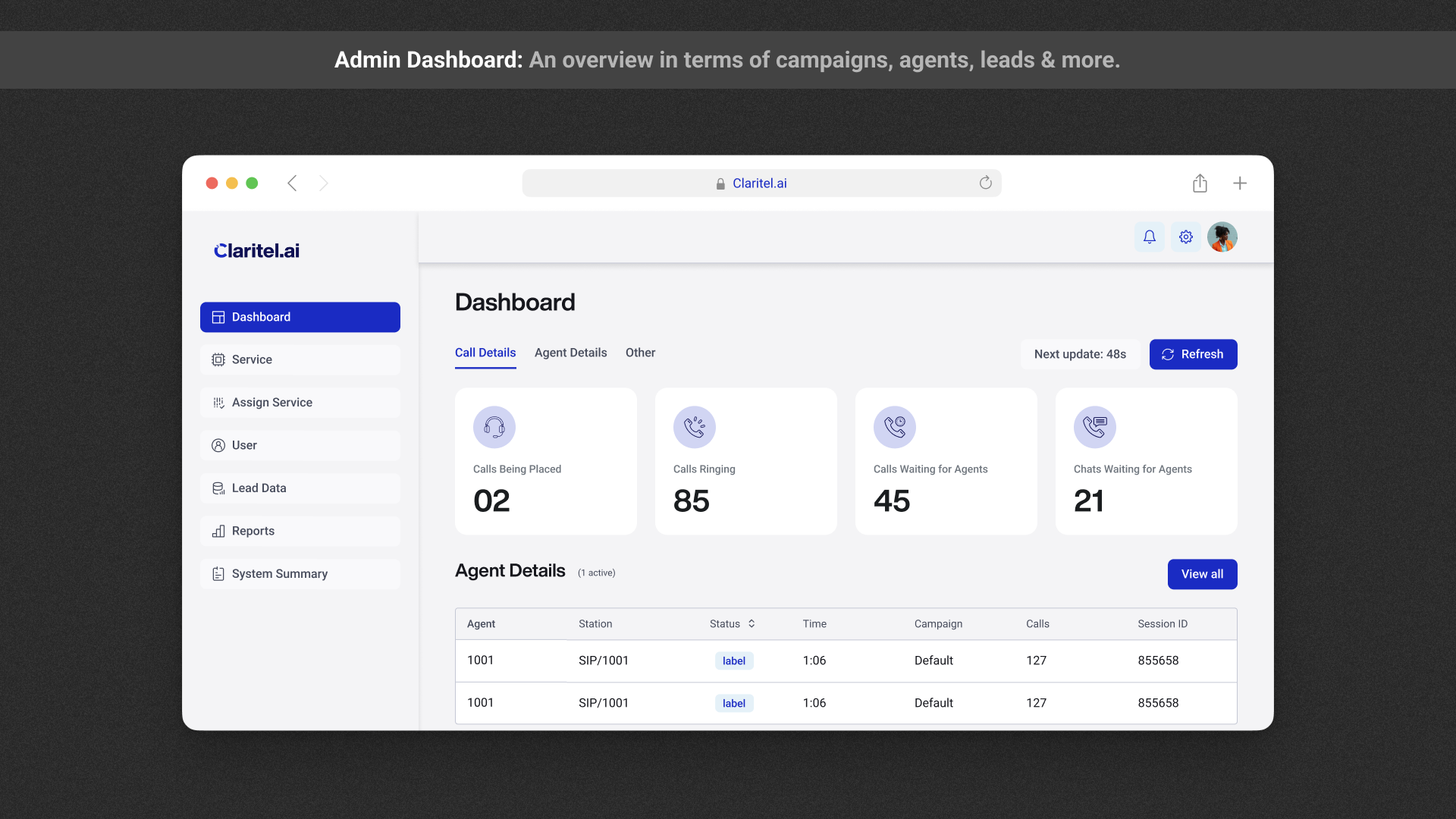
- Designed an intuitive dashboard to surface call metrics, queues, and AI insights.
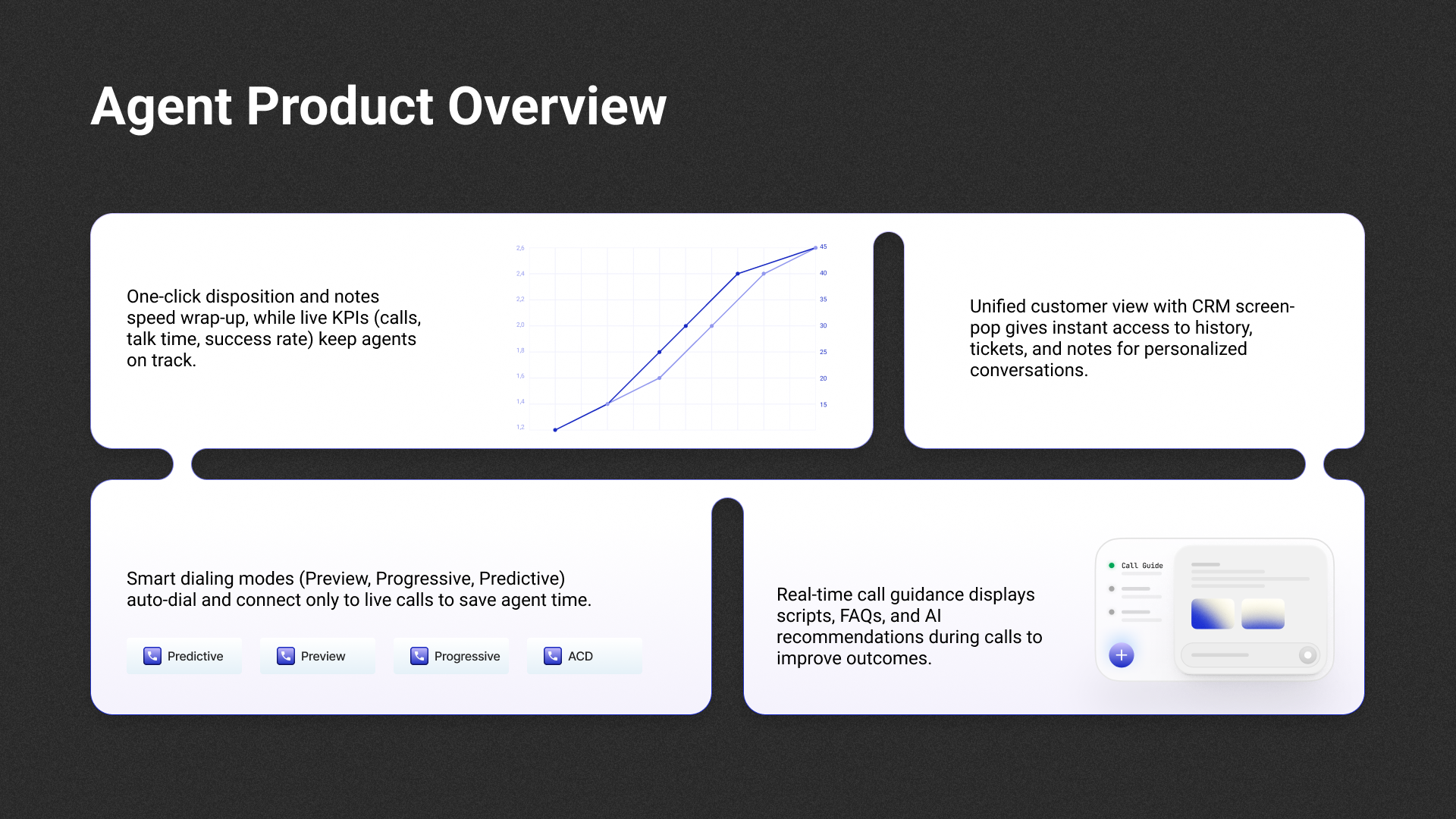
- Introduced early patterns for AI-assisted communication and guidance.
- Kept the UI lightweight but robust enough for real demos.
Outcome: The MVP became a core sales asset. Claritel closed two clients worth ₹5,00,000, directly supported by the clarity and usability of this demo experience.
Agent & Supervisor Dashboards
AI-Assisted Interactions
Bringing Claritel to the World
After validating the MVP with paying clients, we needed a website that could tell Claritel’s story to a wider audience: investors, prospects, and partners.
I designed the new Claritel.ai website with a focus on:
- Clear positioning around trust, AI, and omnichannel communication.
- Story-driven sections that connect business pain points to Claritel’s solutions.
- Conversion-oriented page structure with CTAs for demos and contact.
- Responsive layouts that work across devices used by busy decision-makers.
The site became Claritel’s first handshake with the world — elevating perception from “early startup” to a serious AI contact centre platform.
Website
Solving Real UX Challenges
With clients actively using the platform, we now had something even more valuable than assumptions: real feedback and real workflows.
I conducted interviews and feedback sessions with clients to uncover:
- Confusing navigation paths across dashboards and settings.
- Friction in onboarding and initial setup of teams and numbers.
- Overwhelming screens for first-time users.
- Unclear terminology around AI and telephony concepts.
UX Improvements
- Simplified core user flows to reduce steps and cognitive load.
- Clarified information architecture and grouping of features.
- Standardized UI patterns to reduce surprises and increase predictability.
- Improved empty states, hints, and microcopy for better guidance.
The platform became noticeably more seamless, predictable, and robust, setting it up not just for current clients, but for future scaling.
The Claritel Transformation
In just four months, Claritel evolved from an unstructured product with no clear brand into a cohesive, market-ready platform:
- A defined brand identity that reflects trust, clarity, and innovation.
- A functional MVP that directly contributed to closing ₹5,00,000 in business.
- A modern website that tells Claritel’s story and supports lead generation.
- A refined platform UX that is smoother, more intuitive, and ready to scale.
This wasn’t just a design project — it was a story of discovery, transformation, and impact, where UX helped align vision, brand, and product into one consistent experience.
Strategic UX Designer
My name is Anchit, and I'm a designer.
I specialized in User Experience Design while pursuing a Master of Design degree at Nift in Delhi, combining design principles with research methodologies to create meaningful and user-first solutions.
I've gained hands-on experience designing business strategies and user interfaces for design teams, and I'm familiar with industry-standard design tools like Figma and Adobe Creative Suite, allowing me to bring a combination of creativity and technical proficiency to my work.
We are living in an interesting time; so much is happening in our world right now. I am ready to cherish the moments of innovation. Let's design responsibly to improve our world.
Contact now
Sometimes a click in serendepity makes a great network